Updated September 2026
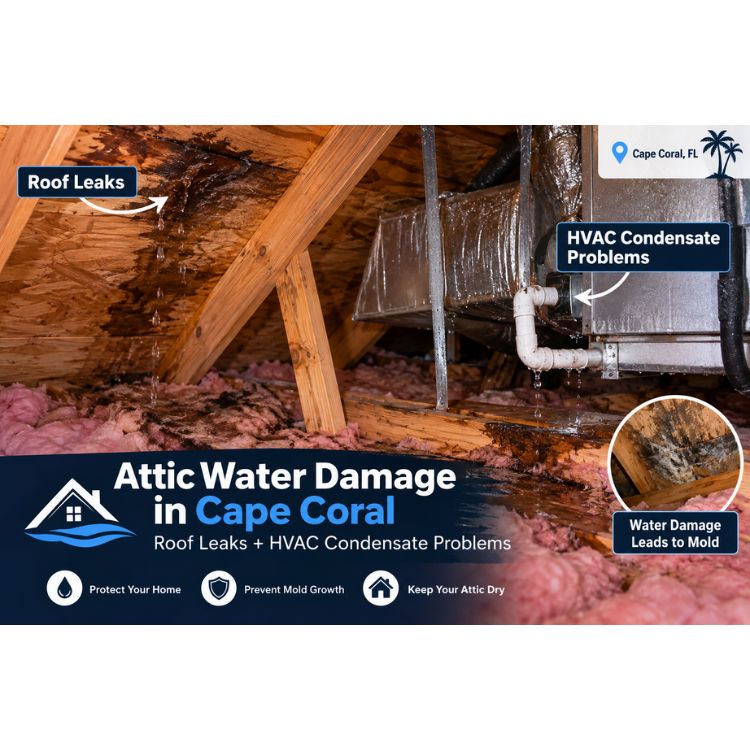
Water in a Cape Coral attic almost always comes from the roof or the air conditioner. If it shows up after rain, suspect the roof. If it shows up on dry days while the AC runs, suspect the condensate system. Then move fast: the EPA recommends drying water damaged areas within 24 to 48 hours to help prevent mold. That window is a target, not a guarantee, and the sections below explain what it means in practice.
What Causes Attic Water Damage in Cape Coral?
Five sources account for most cases. The mechanism matters, because it decides who you call.
Roof leaks. Lifted shingles, slipped or cracked tiles, failed flashing, dried out sealant, and storm punctures. On tile roofs, the underlayment beneath the tiles is the real water barrier, so a leak can appear with no visible tile damage.
Aging plumbing vent flashings. The rubber collar around a vent pipe wears out under sun. Water then runs down the pipe into the attic.
AC condensate overflow. Your AC removes humidity from the air, and a central system can pull several gallons of water out of household air in a day. That water leaves through a narrow drain line. Algae and debris can clog it, and the water then spills into the pan and onto the insulation. This matters most when the air handler sits in the attic, as it does in many Southwest Florida homes.
Sweating ducts. Torn or loose duct insulation lets humid attic air condense on cold metal, and the water drips onto the insulation below.
Bathroom fans venting into the attic. The Florida Building Code says exhaust air can't be discharged into an attic, soffit, or ridge vent. The reason is that the moist air condenses on cold surfaces and soaks insulation. The rule is fairly recent: the requirement to duct fans outdoors arrived with the 2003 or 2006 code edition, depending on interpretation. An older Cape Coral home may still have a fan that dumps into the attic.
The last three don't look like leaks. Moisture builds until something stains, sags, or smells.
Roof Leaks vs. HVAC Condensate Leaks: How to Tell
Timing gives the fastest clue. A roof leak follows the weather. A condensate leak follows the thermostat.
Roof leak | Condensate leak | Sweating duct | |
|---|---|---|---|
When | During or hours after rain | Whenever the AC runs, wet day or dry | Humid days with the AC running |
Where | Below a roof penetration, valley, or damaged spot | Under or around the air handler, along the drain line | Along the duct, often at seams or torn wrap |
Water looks like | Brown-tinted, often carrying dirt | Clear, or slimy and greenish | Clear beads on metal |
Stain pattern | A trail leading uphill toward the roof | Rust or sludge in the pan | Drips spaced along the duct run |
A 15-minute test
Check the backup drain outside. Florida's mechanical code requires backup protection on cooling coils where an overflow could damage the building. The options include an auxiliary pan with its own drain that exits where occupants will notice it, a separate overflow line, or a water-level device that shuts the equipment off. Some installers route the backup drain over a window so drips are easy to spot. Water dripping from that outlet means the main line is clogged.
Run the AC on a dry day. Give it 30 to 60 minutes, then inspect the pan, the drain line, and the insulation under the air handler. New water means the AC.
Log the timing. If the answer isn't clear, note when stains grow for a week or two.
Try a hose test only if the roof is safe to reach. With a helper in the attic, wet the roof in sections, low to high, about 10 minutes each. Skip this on steep or tile roofs and let a roofer do it.
Common diagnosis mistakes
Blaming the roof because it rained. Summer rain days are also the most humid days, so ducts sweat and the AC runs hard. Rain and condensate can look identical on the same afternoon.
Patching the roof without checking the AC. Many homes have both problems, so the drip continues after the "fix."
Trusting stain location. Water travels along rafters and wiring, so the wet spot can sit several feet from the source.
Assuming the visible damage is all of it. Wet insulation can hide under a dry-looking surface.
Signs of Water Damage in Your Attic
Brown or yellow stains on the roof deck, rafters, or ceiling below
Insulation that's flat, clumped, discolored, or damp
A musty smell near the attic hatch or in upstairs rooms
Rusty nails, straps, or duct fittings
Bubbling paint or a soft, sagging ceiling
Black, green, or white fuzzy growth
Wood that feels spongy when you press it with a screwdriver tip
A stain doesn't prove an active leak. Trace its edge in pencil and date it. If the ring grows after the next rain or AC cycle, the leak is live. If it doesn't, the stain may be old, though it still deserves a moisture check.
Hidden damage is harder to find. A moisture meter reads how wet a material is at the spot you touch. A thermal camera shows temperature differences that often point to moisture, but it doesn't measure moisture directly. Professionals typically use both, and one reading on its own can mislead.
How Cape Coral's Humidity and Storm Season Worsen It
Rain. Sources disagree on Cape Coral's annual rainfall. One puts it just over 52 inches, another at about 57 inches, and a third lists only 37. The pattern is consistent, though: the wet season runs June through September.
Heat and humidity. Attics get extremely hot. UCF's Florida Solar Energy Center has measured peak attic air temperatures above 130°F under standard dark shingle roofs, and roofers and insulation contractors cite 150°F or more. Warm, wet air moving through vents condenses on cooler surfaces such as ducts, the AC's drain pan, and the roof deck at night.
A trade-off on ventilation. Vented attics are standard, but at least one Florida spray-foam contractor argues that venting an attic with humid outdoor air can add moisture instead of removing it. That company sells the alternative, so weigh the claim accordingly. Sealed or foamed attics have a downside too: they hide leaks and make roof repairs more complicated. Treat this as a design question for a qualified contractor, not a DIY fix.
Storm season. Hurricane season runs June through November, and the peak risk is August through October. Wind can loosen a shingle or tile without any visible sign, and the leak may not appear until a heavy rain weeks later. Check the attic after any major storm even if the ceilings look fine.
What Happens When Attic Insulation Gets Wet?
Wet insulation stops insulating, then holds moisture against the ceiling and framing. Whether you can save it is a real debate, and the sources disagree.
The conservative view. The EPA's water-damage cleanup table lists both cellulose and fiberglass insulation as materials to discard and replace.
The industry view. Some restoration and insulation companies say lightly damp fiberglass batts hit by clean rainwater may be salvageable if they're lifted, aired, fully dried, and put back without compression. The same source calls saturated cellulose a poor drying candidate.
When there's no debate. Insulation exposed to gray or black water should generally be removed. A slimy condensate pan or debris-laden roof runoff can move the situation toward that end of the scale.
Practical judgment, not a rule: keep insulation only if it's fiberglass, was wet briefly with clean water, hasn't compressed or smelled, and a meter confirms the wood beneath is dry. Otherwise replace it. It costs less than reopening the ceiling later.
Wear an N95 mask, gloves, and eye protection when removing it, and bag it as you go.
Can Attic Water Damage Cause Mold?
Yes. Mold needs moisture, something organic to feed on, and time, and attic wood and dust supply the food.
Timing. The 24-to-48-hour figure gets quoted like a switch. The EPA notes mold can still appear even when materials dry within 48 hours, and it won't always grow after 48 hours. One industry summary says visible growth on porous materials can appear within two to seven days if moisture persists. Slow leaks do the most harm. A roof soak that dries by morning often leaves nothing behind. A condensate line that keeps one spot damp for weeks grows colonies and can rot wood.
How much you can handle yourself. The EPA guidance points homeowners to its larger-scale cleanup guide when mold covers more than about 10 square feet or the water damage is extensive. Florida law reinforces that line: the state's definition of mold remediation covers mold or mold-contaminated matter greater than 10 square feet, and licensing rules apply above that size. Some Florida practitioners note that the law doesn't explicitly say smaller patches need no precautions, so wear protection regardless. Owners doing work on their own residence have limited exemptions, but paid contractors need the right license.
Bleach. It's a common instinct and usually the wrong tool. The EPA doesn't recommend routine use of bleach or other biocides during mold cleanup, and says dead mold can still trigger allergies, so it must be removed, not just killed. On wood and insulation, industry standards call for removing porous materials rather than treating them with chemicals.
Two licenses, by design. Florida licenses mold assessors and mold remediators separately, and the same firm may not do both on one project. One source describes the bar as applying to any structure the assessor evaluated within the previous 12 months. The point is to prevent a company from finding mold it will profit from removing. Verify any license on the state's DBPR website.
What to Do After Finding Water in Your Attic
Protect yourself. Attic heat is a real hazard. One inspector's guidance is to go up in the early morning, drink plenty of water, and take frequent breaks. Step only on joists. If wet insulation sits near wiring or lights, shut off that circuit at the breaker first. Look for a sagging ceiling below, which can hold a lot of water and drop suddenly.
Decide about the AC. If it's the source, running it makes more water. Turn it off at the thermostat, call an HVAC tech the same day, and use fans in the meantime. Trade-off: in a Cape Coral summer, shutting the system off raises indoor humidity and heat, so don't leave it off for days.
Find the source with the test above.
Stop new water. A roofer can tarp a leak. For a clog, see the next subsection.
Photograph everything with dates before touching anything. Keep damaged materials if the adjuster asks to see them.
Start drying. Remove standing water, run fans and a dehumidifier if the space is safe, and don't seal wet materials in a closed space. The EPA suggests indoor humidity between 30 and 60 percent, while the CDC advises staying at or below 50 percent.
Report to your insurer early. See the insurance section below.
Clearing a clogged condensate line
A wet/dry vacuum on the outdoor end of the drain line often pulls out the clog. After that, the advice conflicts on what to pour in and how often.
Product. Angi recommends vinegar or hydrogen peroxide and warns that bleach can corrode pipes and harm the evaporator coil. Carrier's guidance is a cup of distilled white vinegar with a 30-minute soak, and the same source notes that the Department of Energy suggests diluted bleach as an alternative. Never mix vinegar and bleach. Check your unit's manual first, because some manufacturers restrict what you can use.
Frequency. Recommendations run from once a year to every one to three months during cooling season to monthly year-round in Florida.
My advice, which is opinion: because Cape Coral's AC runs most of the year, go toward the frequent end and ask your technician to confirm the schedule.
DIY stops at a rusted pan, a failed float switch, a leaking joint, or a clog that returns within weeks. Those need a technician.
Will Insurance Cover Attic Water Damage?
It depends on your policy, so read it. Several rules shape most claims.
Deadlines. Under Florida Statute 627.70132, a new or reopened claim generally needs notice to your insurer within one year of the date of loss, and a supplemental claim within 18 months. Insurers must acknowledge a claim within seven days, and pay or deny within 60 days of notice. For losses after March 24, 2023, a lawsuit against the insurer generally must be filed within two years.
Sudden vs. gradual. This is where attic claims stall. Some version of a "constant or repeated seepage" exclusion, often set at 14 days or more, appears in almost every Florida homeowners policy. Sudden AC water damage is often covered, while gradual leaks and maintenance-related conditions are commonly excluded. A slow condensate drip that runs for weeks lands in the risky zone. There is also a helpful edge case: a Florida appeals court held that a 14-day exclusion doesn't unambiguously exclude losses from 13 days or fewer. That was one case with specific facts, so it isn't a guarantee for your claim.
Storm deductibles. Florida hurricane deductibles are typically 2, 5, or 10 percent of your dwelling coverage, and they can hit roof-leak claims hard. Sources disagree on what triggers one. One describes a named hurricane with winds of 74 mph or more, while another says a hurricane watch or warning window through 72 hours after it lifts. Florida law also now allows separate roof deductibles. Your declarations page controls.
Contractor paperwork. Assignments of benefits, where you sign your claim rights over to a contractor, are no longer available on policies issued on or after January 1, 2023. Some sources say "issued or renewed," so check your policy dates. In practice you stay responsible to the contractor for the balance, so read any work authorization closely.
This isn't legal advice. If your insurer denies or underpays, a public adjuster or property-insurance attorney can review it.
When You Need Professional Water Damage Restoration
You can handle a small, fresh leak with a shop vac and fans. Call a restoration company if:
Insulation is soaked over a large area
The ceiling below is stained, sagging, or wet
You see or smell mold, or it may cover more than 10 square feet
Materials have stayed wet past 48 hours
Wood is soft, warped, or dark
The water was slimy or debris-laden
A storm claim is involved
Pros find hidden water, extract it, remove ruined materials, and dry the structure with air movers and dehumidifiers, checking readings daily. Drying takes days, and materials that feel dry can still hold moisture, so ask to see the readings.
Attic Water Damage Restoration in Cape Coral
A sound job follows this order:
Assessment. Find the source and map the wet areas.
Extraction. Remove standing water.
Removal. Take out wet insulation and damaged material.
Structural drying. Run equipment with daily moisture checks.
Cleaning and mold check. Clean surfaces and inspect for growth.
Repair. Fix the cause, then rebuild.
Before you hire, ask:
Are your technicians IICRC-certified (S500 covers water damage, S520 mold)?
Will you give me a written scope and daily moisture logs?
Who fixes the roof or AC, and how will you coordinate?
Will you work with my insurer and explain what they'll need?
After hurricanes, out-of-area crews arrive in large numbers. After Hurricane Ian, the City of Cape Coral urged residents to verify contractor licensing through the state's DBPR site. Get more than one estimate, and don't sign anything you haven't read.
Permits are unclear. One guide says virtually every roof replacement and most repairs need a permit. Another says minor repairs under 25 percent of the roof generally don't. Call your local building department before work starts, and be wary of any roofer who says a permit isn't needed.
Restoration without a repair only resets the clock.
How to Prevent Attic Water Damage
Flush the condensate line on a schedule your technician confirms.
Test the float switch and look for rust or cracks in the pan.
Add a water sensor in the pan or under the air handler, ideally one that alerts your phone.
Watch the backup drain outlet. Any drip means trouble.
Fix torn duct wrap, and make sure bath fans vent outdoors.
Inspect the roof before June 1 and after each named storm, and replace worn vent flashings early.
Look in the attic a few times a year, in the morning, and act on smells.
FAQ
How do I know if attic water is from the roof or the AC?
Timing is the clue. Water that appears only after rain points to the roof. Water that appears on dry days while the AC runs points to condensate.
Should I replace wet attic insulation?
Usually. The EPA lists fiberglass and cellulose as discard and replace. Some contractors will dry lightly damp, clean-water fiberglass, so ask for moisture readings first.
How fast does mold grow after an attic leak?
The EPA benchmark is 24 to 48 hours, but growth isn't guaranteed either way. Persistent moisture is the real risk.
Why is water dripping from my AC's outdoor overflow pipe?
The backup drain is working. Your main line is clogged, so turn the AC off and call a technician.
How long do I have to report water damage to my insurer in Florida?
Generally one year from the date of loss for a new claim, and 18 months for supplemental damage. Report as soon as you find it.
Do I need a licensed professional for attic mold?
Above about 10 square feet, Florida law requires licensed mold professionals for paid work, and assessment and removal must come from separate firms.