Common Places Mold Grows in Cape Coral Homes
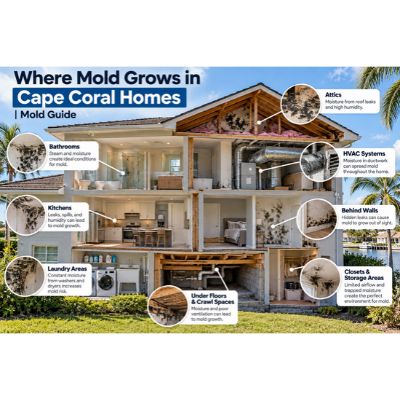
Mold commonly grows in Cape Coral homes in bathrooms, HVAC systems, attics, kitchens, behind walls or under floors, laundry areas, and closed off spaces such as closets. These locations can retain moisture in Southwest Florida’s warm, humid climate, and mold may begin developing on wet materials within 24 to 48 hours when conditions are favorable. If moisture has already caused visible or hidden mold growth, professional mold remediation Cape Coral can help identify the moisture source, contain the affected area, and address the problem safely.
Cape Coral’s warm, humid climate can create favorable conditions for mold growth when moisture is not properly controlled. Average relative humidity runs around 77% year-round and frequently exceeds that in summer and early fall. Temperatures stay in the range mold prefers nearly every month. The city’s extensive canal network more than 400 miles raises ambient moisture, particularly for homes near water. Many Cape Coral homes use slab on grade construction, and local groundwater and soil conditions can make moisture management around foundations especially important. Air conditioning operates almost year round; while it helps control humidity, it also produces condensate that can feed mold if the system is not maintained. After heavy rains or tropical storms, water intrusion accelerates the process. In Cape Coral’s warm, humid environment, wet materials may remain damp longer, creating favorable conditions for mold growth if they are not dried promptly.
Mold requires moisture, a food source (drywall paper, wood, dust, fabric, carpet padding), and suitable temperatures. Cape Coral’s warm, humid conditions can make moisture control especially important, while common building materials such as drywall, wood, dust, and fabrics can provide food sources for mold. The EPA states that the key to controlling mold is controlling moisture and recommends keeping indoor relative humidity below 60%, ideally between 30% and 50%.
Bathrooms
Showers and baths raise humidity daily. Grout absorbs water. Caulk deteriorates and cracks. Exhaust fans that are too small, used inconsistently, or vented into the attic leave moisture on ceilings, walls, and fixtures. Growth commonly appears on tile grout and caulk, the ceiling above the shower, around the toilet base, under vanities, and on the backs of cabinet doors.
Wipe down wet surfaces after use. Run the exhaust fan during showers and for 20–30 minutes afterward. Leave the bathroom door open when the room is unoccupied. Reseal grout and caulk as they age. Even a slow leak under a sink or around a toilet flange can support mold for weeks before a smell or stain becomes obvious.
HVAC Systems and Air Handlers
Air conditioning is essential here, yet it creates opportunities for mold. Condensate forms on cold coils. A clogged drain line or standing water in the drip pan allows growth that can then move through the ducts. Dusty coils and dirty filters provide food. Air handlers placed in attics or closets face higher risk because those spaces tend to be hot and humid.
Musty odors when the system starts, visible growth near vents, or Musty odors when the system starts or visible growth near vents can indicate a moisture or mold problem. Change filters on schedule. Clean coils, the drain pan, and the condensate line regularly. Keep the drain line clear. If indoor humidity remains high despite the AC running, a properly sized system or a supplemental dehumidifier often makes the difference.
Attics
Heat and moisture rise into the attic. Roof leaks whether from aging materials or storm damage soak insulation and roof decking. Bathroom or kitchen exhaust fans that terminate in the attic dump warm, moist air onto wood and insulation. Air leaks from the living space below add more humidity. Limited ventilation keeps the space from drying.
Dark staining on roof sheathing, a musty smell near the attic access, or compressed insulation signal a problem. Confirm that all exhaust fans vent to the exterior. Improve ventilation if the attic feels stagnant. Seal air leaks from the conditioned space. Inspect after any roof damage or significant rain.
Kitchens
Leaks under sinks, behind dishwashers, or around refrigerators create dark, low-airflow zones. Cooking adds humidity. Growth often appears on cabinet backs, under sink bases, and around appliance drip areas.
Check under sinks periodically. Wipe spills immediately. Give appliances adequate clearance. Open cabinet doors occasionally to improve air movement.
Behind Walls, Under Floors, and Near the Slab
These hidden areas produce the costliest surprises. Small plumbing leaks inside walls, roof water traveling sideways, or moisture rising through a slab foundation can feed mold for months without visible signs. Drywall paper is an excellent food source. Carpet padding holds water after spills or flooding. In some Cape Coral properties, local groundwater conditions and proximity to canals can make moisture management around the slab particularly important. A persistent musty odor in a house without a basement is a common warning.
Soft or warped flooring, peeling paint, bubbling drywall, or higher humidity in one room suggest hidden moisture. After any water event, dry materials thoroughly within 24–48 hours. Moisture meters or thermal imaging locate problems that are not obvious to the eye.
Laundry Rooms and Closets
Front-loading washers develop mold in door seals and detergent drawers when they remain damp. Restricted or poorly routed dryer vents raise humidity. Closets against exterior walls or in rarely used rooms trap humid air. Stored clothing, shoes, and leather goods can support growth. Seasonal or vacant homes are more vulnerable because the air conditioner may not run consistently and air movement drops.
Clean washer seals regularly and leave the door open between loads. Confirm the dryer vents outdoors. Crack closet doors for airflow when practical. In vacant properties, keep the AC operating and consider a dehumidifier.
Windows, Exterior Walls, and Remaining Spots
Condensation forms when humid air meets cooler surfaces. Window sills, tracks, and frames are frequent sites. North-facing or shaded walls and areas behind furniture that blocks airflow also collect moisture. Exterior growth under eaves or around vents can indicate interior humidity problems or drainage issues near the foundation.
What Works in Cape Coral Conditions
Monitor indoor humidity with a simple hygrometer rather than guessing. Keep levels under 60% and closer to 50% or lower when possible. Run the air conditioner consistently instead of shutting it off for long periods. Fix leaks and dry wet materials within 24–48 hours. Improve ventilation in wet rooms. Maintain the HVAC system. Keep gutters clear and direct water away from the foundation. In homes that stay humid or sit vacant for stretches, a dehumidifier provides practical help.
Small surface growth on hard, non-porous materials can often be cleaned with detergent and water, then dried completely. Porous materials that have remained wet drywall, carpet, insulation usually require removal. When growth covers a larger area, a strong odor exists without visible mold, or household members have respiratory sensitivities, professional inspection is the more reliable next step. Professionals familiar with Southwest Florida properties can assess how humidity, water intrusion, HVAC systems, storm exposure, and building materials may contribute to persistent moisture and mold growth.
Moisture control is the foundation of prevention. Checking the high-risk locations described above and responding quickly to water keeps most Cape Coral homes from developing significant mold problems.